



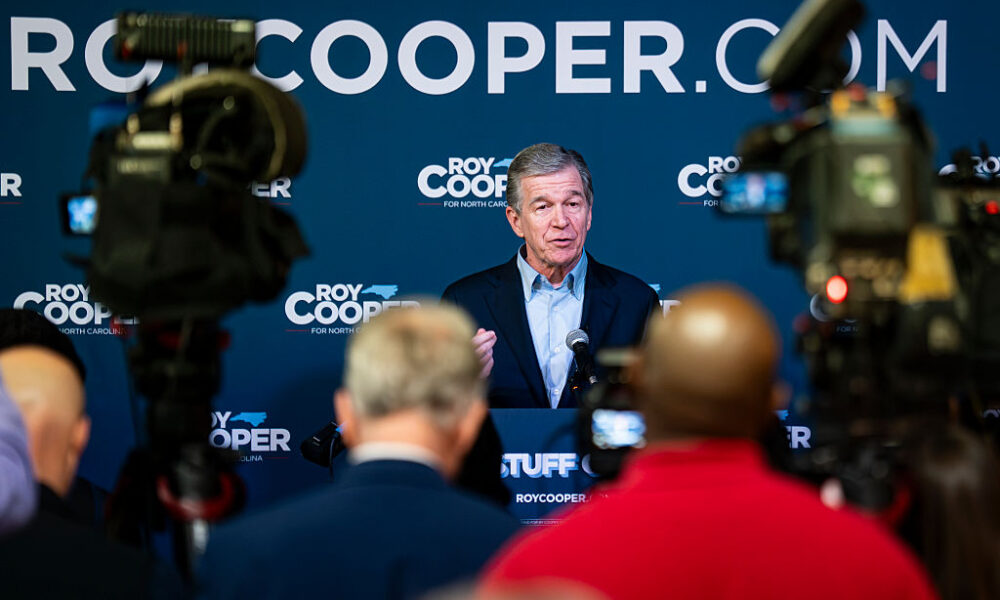
CHARLOTTE, NC — North Carolina’s 2026 midterm elections brought major changes to the state’s political landscape Tuesday, November 3, as Democrats captured a Republican-held U.S. Senate seat, gained congressional seats and won control of the North Carolina House of Representatives.
Former Democratic Governor Roy Cooper defeated Republican Michael Whatley in one of the nation’s most closely watched Senate races, while several competitive congressional contests resulted in Democratic victories.
The election also saw Democratic candidates win key judicial races, including a seat on the North Carolina Supreme Court.
The results come as Democrats secured control of both chambers of Congress nationally, making North Carolina an important part of the party’s gains in the 2026 midterms. AP News+2
North Carolina’s Major Election Results
Reported vote shares as of November 4, 2026. Figures are preliminary and subject to certification.
| Race | Leading candidate / winner | Vote share |
|---|---|---|
| U.S. Senate | Roy Cooper (D) | 59.87% |
| U.S. House District 1 | Don Davis (D) | 49.62% |
| U.S. House District 2 | Deborah Ross (D) | 79.72% |
| U.S. House District 9 | Richard Ojeda (D) | 51.40% |
| U.S. House District 11 | Jamie Ager (D) | 58.67% |
| U.S. House District 12 | Alma Adams (D) | 83.35% |
| U.S. House District 13 | Paul Barringer (D) | 52.81% |
| U.S. House District 14 | Lakesha Womack (D) | 52.19% |
| NC Supreme Court | Anita Earls (D) | 60.16% |
| NC Court of Appeals, Seat 1 | John Arrowood (D) | 58.12% |
| NC Court of Appeals, Seat 2 | Toby Hampson (D) | 58.13% |
| NC Court of Appeals, Seat 3 | Christine Walczyk (D) | 58.41% |
Selected major races, not an exhaustive list of North Carolina’s 14 congressional districts or local contests. Percentages are based on preliminary reported returns. 2026 Midterms
Roy Cooper Wins North Carolina’s U.S. Senate Race
Former North Carolina Governor Roy Cooper defeated Republican Michael Whatley to win the U.S. Senate seat being vacated by Republican Thom Tillis.
Cooper received nearly 60% of the vote, compared with approximately 38% for Whatley, according to preliminary election returns.
The victory gives North Carolina its first newly elected Democratic U.S. senator since 2008.
Cooper, who previously served two terms as governor, focused his campaign on lowering everyday expenses, expanding healthcare access and addressing housing affordability.
Whatley, a former Republican National Committee chairman, received support from President Donald Trump and campaigned on Republican economic and public safety priorities.
The Senate election attracted significant national attention because the seat was considered important to determining control of the chamber.
Cooper’s victory flipped the seat from Republican to Democratic control and contributed to the Democrats’ new Senate majority. AP News
Democrats Gain Control of North Carolina’s State House
One of the most significant developments of the election was the Democratic Party’s reported capture of the North Carolina House of Representatives.
Democratic candidates gained seats in several competitive legislative districts, changing the balance of power in a chamber previously controlled by Republicans.
The shift could have important implications for future debates involving public education, state spending, healthcare, taxes and housing.
Republicans entered the election controlling both chambers of the General Assembly. The reported Democratic takeover of the House would create divided legislative control and require greater cooperation between the two parties to pass legislation. AP News
Charlotte Congressional Races Deliver Major Results
Charlotte and surrounding communities played an important role in the state’s congressional elections.
In North Carolina’s 12th Congressional District, Democratic Congresswoman Alma Adams secured reelection with approximately 83% of the vote, defeating Republican Jack Codiga.
Meanwhile, Democrat Lakesha Womack led Republican incumbent Tim Moore in the 14th Congressional District, receiving approximately 52% of the vote.
Womack’s reported victory represents a change in representation for the district, which includes communities in the Charlotte region.
Elsewhere, Democrat Jamie Ager defeated Republican Jennifer Balkcom in the 11th Congressional District, flipping a Republican-held seat in western North Carolina.
These results contributed to the Democratic Party’s gains in the U.S. House of Representatives. 2026 Midterms+1
Anita Earls Wins North Carolina Supreme Court Race
Democratic Justice Anita Earls won reelection to the North Carolina Supreme Court, defeating Republican Sarah Stevens.
Earls received approximately 60% of the vote, compared with nearly 40% for Stevens.
Democrats also won three contested North Carolina Court of Appeals seats, with John Arrowood, Toby Hampson and Christine Walczyk securing victories.
The results are significant because North Carolina’s appellate courts hear cases involving state laws, elections, criminal justice and constitutional questions. 2026 Midterms
North Carolina Voter Turnout Shows Strong Participation
North Carolina voters participated in large numbers during the 2026 election cycle.
More than 2.8 million residents cast ballots during the state’s 17-day early voting period, representing nearly 36% of registered voters.
That exceeded the approximately 29% early-voting participation rate recorded at the same point during the 2022 midterm elections.
The higher early-voting participation highlights the level of public interest in this year’s Senate, congressional and state legislative contests. EdNC
What the Election Means for North Carolina Residents
The election results could influence several issues affecting North Carolina communities, including:
- Cost of living: Federal and state lawmakers will continue addressing housing affordability, grocery prices and household expenses.
- Education: Changes in the state legislature could affect school funding, teacher compensation and education policy.
- Healthcare: Federal and state representatives will face decisions involving healthcare costs and access to services.
- Infrastructure: Transportation improvements, disaster recovery and economic development remain important priorities.
- Federal representation: North Carolina’s new congressional delegation will participate in a Democratic-controlled Congress beginning in January 2027.
A Significant Political Shift for North Carolina
North Carolina’s 2026 midterm elections produced several major changes, including Roy Cooper’s victory in the U.S. Senate race, Democratic gains in congressional districts and a reported change in control of the state House.
The results also reinforced the importance of Charlotte and surrounding communities in statewide elections.
With newly elected officials preparing to take office in January 2027, attention will turn toward legislative priorities, federal policy and the direction of North Carolina’s government.
Election status: This recap reflects preliminary results and reported race calls available November 4, 2026. It does not include every county, municipal, judicial or legislative contest. Final vote totals and certification remain subject to the election process.
Residents can review additional results through the North Carolina State Board of Elections.
(Photo by Al Drago/Getty Images)


No comments