




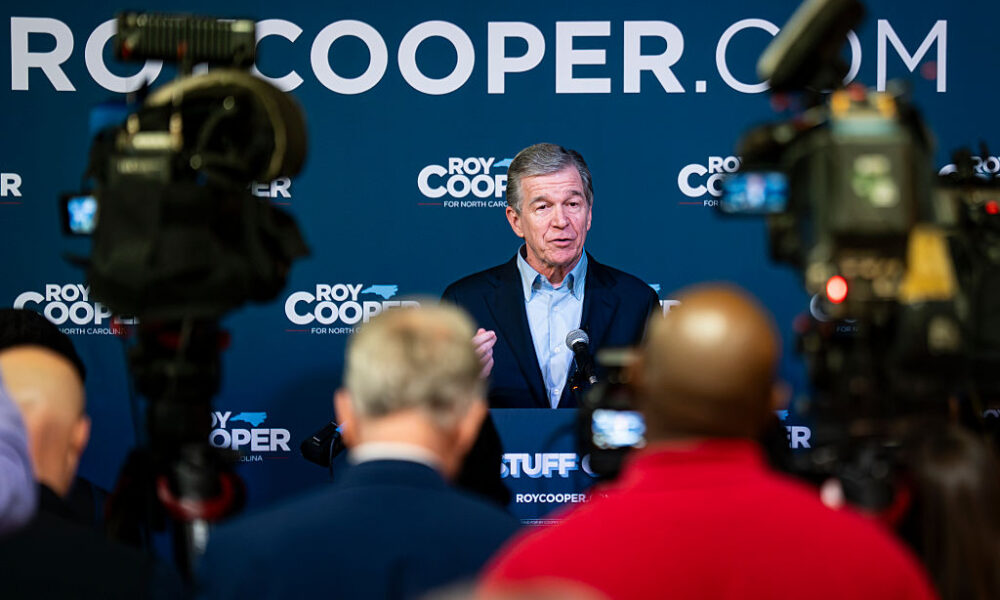
CHARLOTTE, NC — North Carolina’s closely watched U.S. Senate election is drawing national attention as former Democratic Governor Roy Cooper and Republican Michael Whatley compete for a seat that could influence the balance of power in Washington.
With Election Day approaching on November 3, both campaigns are working to reach voters across the state, including the rapidly growing Charlotte metropolitan area.
The race is particularly important because Republican Senator Thom Tillis is not seeking another term.
Cooper, who previously served two terms as North Carolina governor, entered the contest with statewide name recognition and experience winning competitive elections.
Whatley, a former Republican National Committee chairman, has emphasized his support for President Donald Trump’s agenda and Republican priorities.
Recent polling has shown Cooper maintaining an advantage.
A Trafalgar Group survey conducted in early October placed Cooper at approximately 48.8%, compared with 40.9% for Whatley.
Other recent surveys have also shown Cooper leading, although polling results remain estimates rather than guarantees of the final outcome.
The campaigns have focused on several issues important to North Carolina voters, including economic conditions, healthcare, immigration, public safety and federal spending.
Campaign financing and advertising have also become major developments in the contest.
Recent reporting indicates that Whatley’s campaign has reduced its television advertising reservations as Republican-aligned organizations reconsider spending priorities in competitive Senate races.
Whatley has maintained that his campaign has the resources necessary to compete through Election Day.
Meanwhile, Cooper has continued encouraging supporters to vote despite polls showing him ahead.
Political observers are closely watching voter turnout in Mecklenburg County, Wake County and other population centers where suburban and urban voters could play an important role.
Rural communities and smaller counties will also be important to the final statewide result.
With control of the U.S. Senate potentially depending on a small number of competitive races, North Carolina remains a major focus for both national parties.
The election will determine who represents North Carolina in the Senate for the next six years.
Voters are encouraged to verify their registration status, review candidates’ positions and check official election resources before casting their ballots.
Election Day is Tuesday, November 3, 2026.
(Photo by Al Drago/Getty Images)



No comments